



How to Match Cosmetic Tube Dimensions with Automatic Filling Machines?

Мы являемся фабрикой, предоставляющей полный спектр услуг по изготовлению косметической упаковки на заказ, и имеем более чем 20-летний опыт в производстве косметических туб, тюбиков-дозаторов, туб ABL, туб PBL, туб с безвоздушным насосом, туб для блеска для губ, туб для средств по уходу за кожей. ПЦР (переработанные отходы потребления) ) Трубка , и т. д.
Matching cosmetic tube dimensions with automatic filling machines is an important step in building an efficient and reliable packaging production line. Even when a tube has the correct filling capacity, differences in diameter, overall length, shoulder structure, or sealing area can affect how it moves through the equipment.
For cosmetic brands and packaging manufacturers, the selection process should involve both the tube supplier and the filling machine manufacturer. The goal is not simply to choose a tube that holds the required amount of cream or lotion, but to ensure that the packaging can be positioned, filled, transferred, and sealed consistently during automated production.
At Function Packaging, cosmetic tube dimensions can be customized according to product capacity, material, closure design, and packaging requirements. Understanding the following measurements can help buyers select suitable cosmetic squeeze tubes before moving into large-scale production.
Why Tube Dimensions Matter in Automatic Filling
Automatic cosmetic tube filling machines are designed to handle specific packaging dimensions. Depending on the machine configuration, tubes may be automatically loaded, oriented, positioned, filled through the open end, and sealed or trimmed at the end of the production cycle.
If the tube dimensions do not match the machine's tooling and handling system, several production problems may occur:
- Unstable tube positioning: Tubes with an unsuitable diameter may not fit the machine's holding cups or positioning fixtures securely.
- Inaccurate filling: Incorrect tube positioning can affect nozzle alignment and increase the risk of product contamination around the opening.
- Sealing difficulties: An unsuitable tube length or tail configuration may interfere with the sealing station.
- Production interruptions: Inconsistent tube dimensions can cause feeding errors, misalignment, or additional machine adjustments.
- Inconsistent appearance: Poor positioning during filling and sealing may result in uneven finished tube lengths or sealing edges.
These issues are not necessarily caused by the tube itself. In many cases, they result from insufficient coordination between packaging dimensions and machine specifications before production begins.
Key Cosmetic Tube Dimensions to Check Before Ordering
Before selecting a cosmetic tube for automated filling, buyers should prepare a dimensional specification sheet. The following measurements are particularly important when discussing packaging compatibility with equipment suppliers.
Tube diameter
Tube diameter is one of the first specifications to confirm. It determines the approximate width of the tube body and directly affects the size of the machine's holding fixtures, loading components, and positioning system.
Common cosmetic tube diameters vary according to the intended capacity and product design. For example, smaller-diameter tubes are frequently used for eye creams and targeted skincare products, while larger diameters are suitable for facial cleansers, body lotions, and other personal care products.
Function Packaging offers different diameter options, including D16, D25, D30, D35, D40, and D50 designs across its cosmetic tube range. However, the exact dimensions available depend on the product structure and customization requirements.
Overall tube length
Tube length affects how the packaging fits into the machine's loading and transfer system. It also determines the available space for filling and final tail sealing.
When measuring tube length, buyers should clarify whether the measurement includes the cap, shoulder, or other components. The overall assembled length and the tube body length are not necessarily the same.
For automatic filling applications, it is particularly important to confirm the maximum and minimum tube length supported by the equipment. A tube that is too short or too long may require different positioning adjustments or machine tooling.
Filling capacity
Filling capacity is usually expressed in milliliters (ml), but capacity alone does not determine whether a tube can run on a particular machine.
Two cosmetic tubes may both hold 50ml while having different diameters and lengths. Their physical dimensions can therefore require different filling machine settings.
Buyers should also distinguish between the nominal packaging capacity and the actual filling volume. The usable internal volume, product density, filling tolerance, and headspace requirements should all be considered during development.
Shoulder and opening dimensions
The shoulder connects the tube body to the neck and dispensing opening. Its shape, internal passage, and neck dimensions affect product flow and the selection of the filling nozzle.
For example, a narrow opening may require a smaller filling nozzle, while a thicker cream formulation may need a nozzle and filling system designed for higher-viscosity products.
These details are particularly important for skincare products containing thick creams, gels, or other formulations that require controlled dispensing.
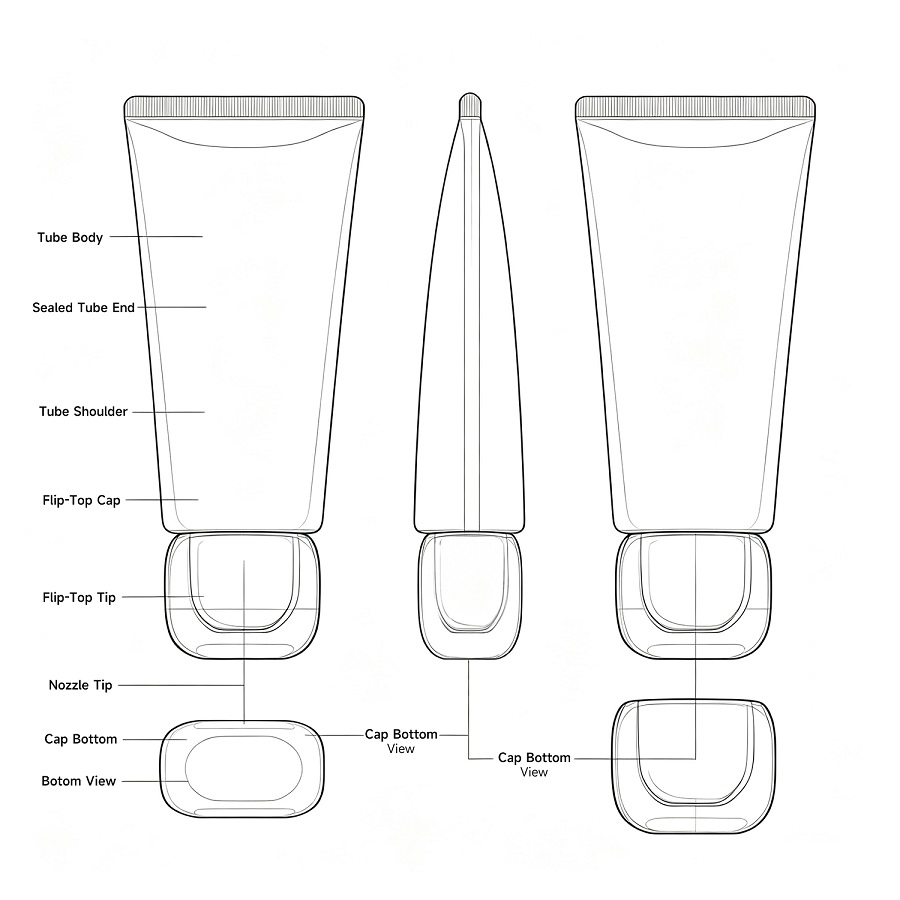
Cosmetic tube structural diagram illustrating the main packaging components that should be considered during machine compatibility checks.
How to Match Tube Diameter and Length with Filling Equipment
Once the basic tube specifications are available, the next step is to compare them with the filling machine's technical requirements. Instead of relying on general capacity recommendations, buyers should confirm the actual dimensions supported by their equipment.
Match the tube diameter with the holding fixture
Automatic tube filling machines commonly use mechanical clamps, holders, or positioning cups to keep tubes stable during processing. The fixture must accommodate the tube's actual external diameter and shape.
For round tubes, the external diameter is usually the main reference measurement. For oval or flat tubes, the width and thickness should both be provided because the cross-sectional shape affects positioning.
Buyers should also check whether the equipment requires interchangeable holders when changing between different tube sizes. This is particularly useful for manufacturers running multiple cosmetic product lines on the same production equipment.
Check tube length against machine loading and sealing limits
The tube length must fall within the machine's permitted working range. The equipment manufacturer should confirm the maximum and minimum overall dimensions, as well as the required clearance around the filling and sealing stations.
For example, a machine may accommodate a particular tube diameter but still require adjustments when switching from a shorter eye cream tube to a longer facial cleanser tube.
It is also important to confirm the available sealing length. The machine must have sufficient space to grip and seal the open tail without affecting the filled product or finished packaging appearance.
Consider the filling nozzle and product characteristics
Tube opening dimensions should be evaluated alongside the formulation. A lightweight lotion and a thick cleansing cream may require different filling nozzle configurations, even when packaged in tubes with identical external dimensions.
Product viscosity, filling speed, nozzle insertion depth, and anti-drip requirements can all influence the final equipment setup.
For brands developing customized PE cosmetic tubes with nozzle applicators, it is worth checking the opening structure and filling access before finalizing the packaging design.
Does Tube Material Affect Automatic Filling and Sealing?
Yes. Tube material is another important factor because different structures respond differently to filling, handling, and sealing processes.
PE cosmetic tubes
PE tubes are widely used for skincare, facial cleansers, hand creams, and body care products. Their flexible structure makes them suitable for squeeze packaging, while their material properties allow different printing, color, and surface finish options.
During automated production, the tube's wall structure, thickness, and material consistency should be evaluated to ensure stable feeding and handling.
ABL laminated tubes
ABL (Aluminum Barrier Laminate) tubes combine a plastic-based structure with an aluminum barrier layer. They are often selected for products requiring additional protection against light, oxygen, and moisture.
When choosing an ABL tube for automatic filling, the machine's sealing method and temperature settings should be checked against the specific laminate structure. The sealing conditions should be confirmed through sample testing rather than assumed to be identical to those used for PE tubes.
Explore ABL cosmetic tubes for packaging applications where barrier performance is an important consideration.
PBL laminated tubes
PBL (Plastic Barrier Laminate) tubes use a plastic-based barrier structure without the traditional aluminum barrier layer. They are suitable for brands seeking a laminated packaging solution with different material and appearance characteristics.
As with ABL tubes, buyers should confirm the tube's sealing compatibility, laminate construction, and processing requirements with the filling machine supplier.
Function Packaging also provides PBL tube packaging options for different cosmetic and personal care applications.
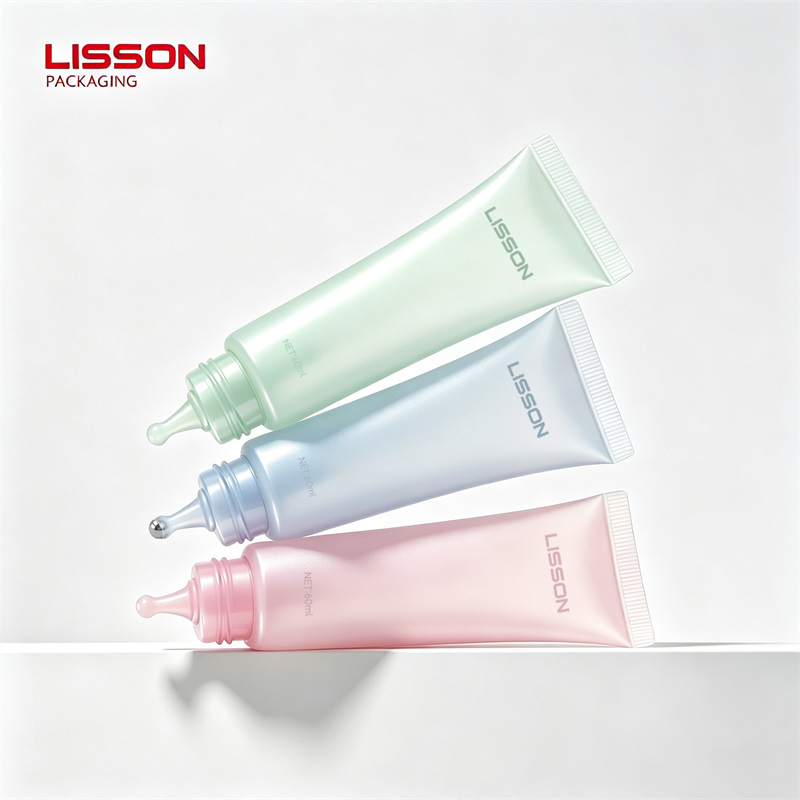
Custom cosmetic squeeze tube designs with different body shapes, openings, and applicator configurations.
How Cap and Tail-Sealing Designs Influence Machine Compatibility
Tube body dimensions are only part of the packaging specification. The cap, shoulder, and open tail also need to be considered during automated production planning.
Most conventional cosmetic squeeze tubes are filled through the open tail before the tail is sealed. This means that the cap and dispensing closure are generally installed before filling, while the opposite end remains available for the filling process.
Different cap structures may affect the way tubes are loaded, oriented, and transferred through the equipment. For example, flip-top caps, screw caps, and special applicator closures may have different external shapes and positioning requirements.
For brands choosing flip-top cosmetic tubes, the cap's external dimensions and orientation should be checked against the machine's loading and holding system.
Tail sealing also requires careful consideration. Depending on the tube material, the equipment may use hot-air, hot-jaw, ultrasonic, or other compatible sealing technologies. The selected process must match the material structure and the machine's available sealing configuration.
For laminated tubes, printing position, laminate construction, and sealing area should be reviewed together to prevent poor sealing quality or damage to the packaging surface.
A Practical Example of Matching Tube Dimensions
Consider a skincare brand planning to manufacture a 50ml facial cream using an automatic tube filling machine.
The brand has selected a round PE cosmetic tube and needs to confirm whether the proposed packaging dimensions can be used with its existing production equipment.
The following information should be collected before approving the packaging:
- Nominal capacity: 50ml.
- Tube diameter: Confirmed external diameter in millimeters.
- Tube length: Actual body length and overall assembled length.
- Opening dimensions: Neck diameter and internal opening size.
- Material: PE tube body and compatible closure materials.
- Cap structure: Screw cap, flip-top cap, or another selected design.
- Sealing requirements: Compatible sealing method and available tail-sealing area.
Next, the equipment manufacturer should compare these measurements with its supported tube diameter range, loading fixture dimensions, filling nozzle specifications, and sealing station limits.
If the proposed tube does not match the existing tooling, the brand can evaluate alternative tube dimensions or discuss customized machine fixtures. This comparison should be completed before mass production to reduce unnecessary tooling changes and production delays.
The key point is that a 50ml tube is not automatically compatible with every 50ml filling machine. Physical dimensions and processing requirements determine actual compatibility.
What Information Should You Send to a Cosmetic Tube Supplier?
Providing complete technical information at the beginning of a packaging project makes it easier for the tube supplier to recommend an appropriate structure and identify potential compatibility issues.
Before requesting a quotation or customized sample, prepare the following information:
- Target filling capacity and product type.
- Preferred tube diameter, length, and cross-sectional shape.
- Tube material requirements, such as PE, ABL, or PBL.
- Shoulder, neck, and opening dimensions.
- Cap type and overall packaging configuration.
- Automatic filling machine brand and model.
- Machine-supported tube diameter and length ranges.
- Filling nozzle and tail-sealing specifications.
- Product viscosity and filling temperature, where applicable.
- Required decoration, printing, and surface finish.
If the brand already has a tube sample or technical drawing, sharing it with the supplier can make the evaluation more accurate. Machine drawings, fixture specifications, and sample packaging are also useful references.
Function Packaging provides customized cosmetic tube development, including tube diameter, length, capacity, shoulder, nozzle, closure structure, and material selection. Its custom cosmetic tube design service can help brands review packaging dimensions and structural requirements before moving into tooling and production.
Common Mistakes to Avoid When Selecting Cosmetic Tubes
Even experienced packaging buyers can overlook certain details when coordinating tube packaging with automatic filling equipment. The following mistakes are worth avoiding:
Choosing tubes based only on filling capacity
Capacity does not describe the complete physical dimensions of a tube. Always compare diameter, length, opening, and shape with the machine specifications.
Ignoring the difference between round and oval tubes
Round and oval tubes may have similar nominal capacities but different external dimensions. The machine's holding and positioning components must be suitable for the selected shape.
Assuming all tube materials use the same sealing settings
PE, ABL, and PBL structures may require different sealing conditions. Confirm the recommended process with both the tube supplier and equipment manufacturer.
Approving production without testing physical samples
Technical drawings are useful, but actual samples provide a better opportunity to check feeding, positioning, filling, and sealing performance. A machine trial is recommended before approving large production quantities.
Changing tube dimensions after machine setup
Even small dimensional changes can affect the positioning system or sealing station. Final tube specifications should be approved before machine tooling and mass production are arranged.
Frequently Asked Questions About Cosmetic Tube and Filling Machine Compatibility
How do I know if a cosmetic tube is compatible with an automatic filling machine?
Compare the tube's external diameter, length, shape, opening dimensions, material, and tail-sealing requirements with the machine's technical specifications. A physical sample test is the most reliable way to confirm compatibility before mass production.
Does tube diameter affect automatic filling accuracy?
Yes. Tube diameter affects how the packaging fits into the machine's holding fixtures and positioning system. Incorrect positioning can cause filling nozzle misalignment and inconsistent production results.
Can one automatic filling machine handle different cosmetic tube sizes?
Many automatic filling machines can handle multiple tube sizes within a specified working range. However, changing diameters, lengths, or tube shapes may require different holding fixtures, adjustments, or tooling. Always confirm the machine's supported specifications.
What tube dimensions should be provided to a filling machine manufacturer?
At minimum, provide the external tube diameter, body length, overall assembled length, tube shape, opening dimensions, cap configuration, material structure, and tail-sealing requirements. A technical drawing or physical sample is also recommended.
Are PE and laminated cosmetic tubes suitable for automatic filling?
Both PE and laminated cosmetic tubes can be used in automated filling applications when the equipment is designed or configured for the relevant packaging structure. Their material properties and sealing requirements should be checked before production.
Should cosmetic tube samples be tested before mass production?
Yes. Sample testing helps verify tube feeding, positioning, filling, and sealing performance. It also allows brands to identify dimensional or structural issues before committing to large production quantities.
Can Function Packaging customize cosmetic tube dimensions for existing filling machines?
Yes. Function Packaging offers customized cosmetic tube development, including diameter, length, capacity, shape, shoulder, nozzle, cap, and material options. Buyers can share their machine specifications and packaging requirements for a more suitable tube design proposal.
Choose Cosmetic Tube Dimensions That Support Efficient Production
Matching cosmetic tube dimensions with automatic filling machines requires more than selecting a suitable capacity. Diameter, length, opening structure, material, closure design, and sealing compatibility all influence the final packaging performance.
For cosmetic brands planning new packaging projects or upgrading existing production lines, confirming these specifications early can help reduce machine adjustments, improve production consistency, and avoid unnecessary packaging changes.
Function Packaging supports customized cosmetic tube solutions for skincare, beauty, and personal care applications. From PE and laminated tube structures to customized dimensions and closure designs, the packaging development process can be tailored to the requirements of each project.
If you are planning a new cosmetic tube project, share your target capacity, preferred dimensions, product formulation, and automatic filling machine specifications with our team. We can help evaluate suitable packaging options and develop a tube design that better fits your production requirements.